VII
When Desire Grew Wings
The traditions overlap. Emphasis changes. Later centuries remembered a child with a bow and took that image for the whole story.
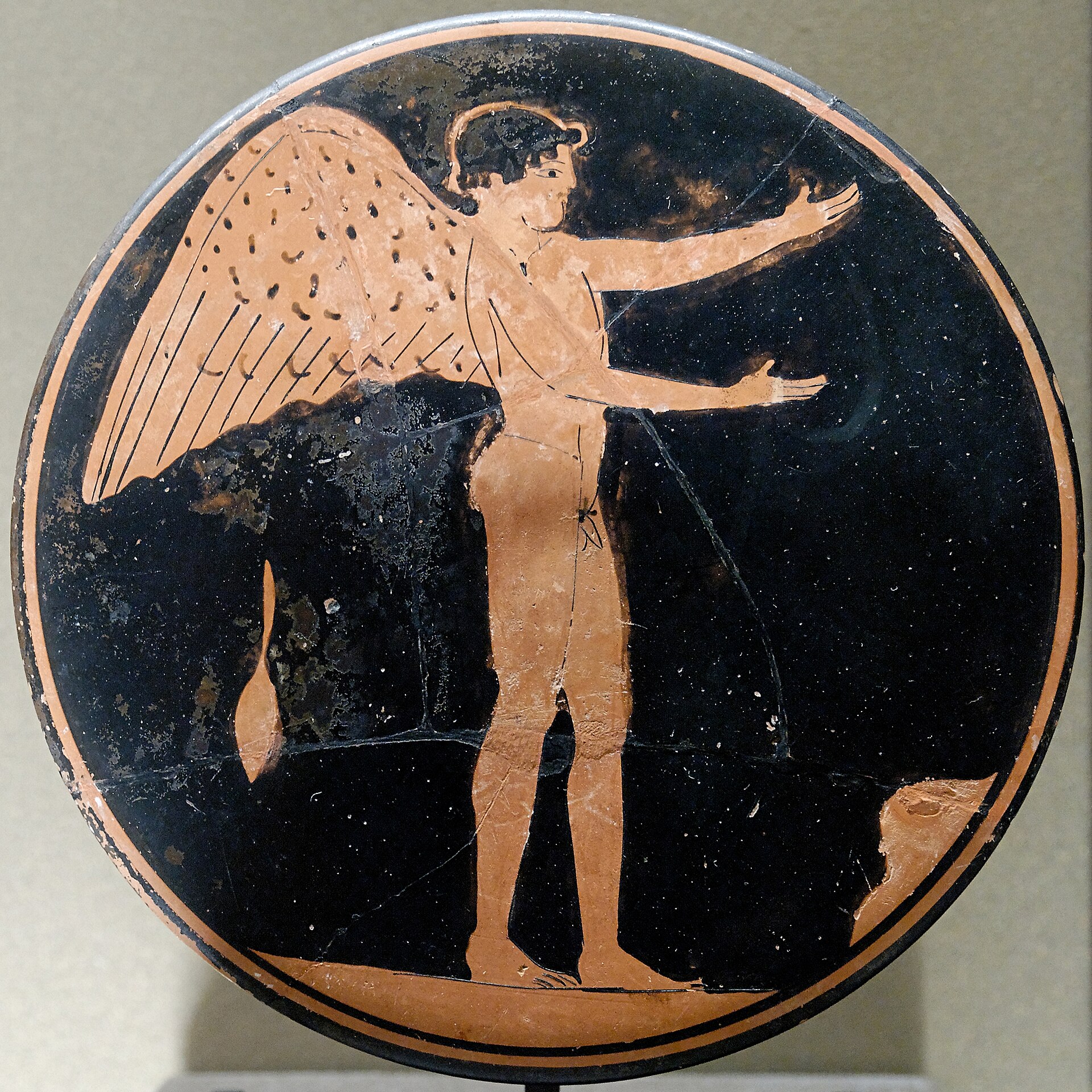
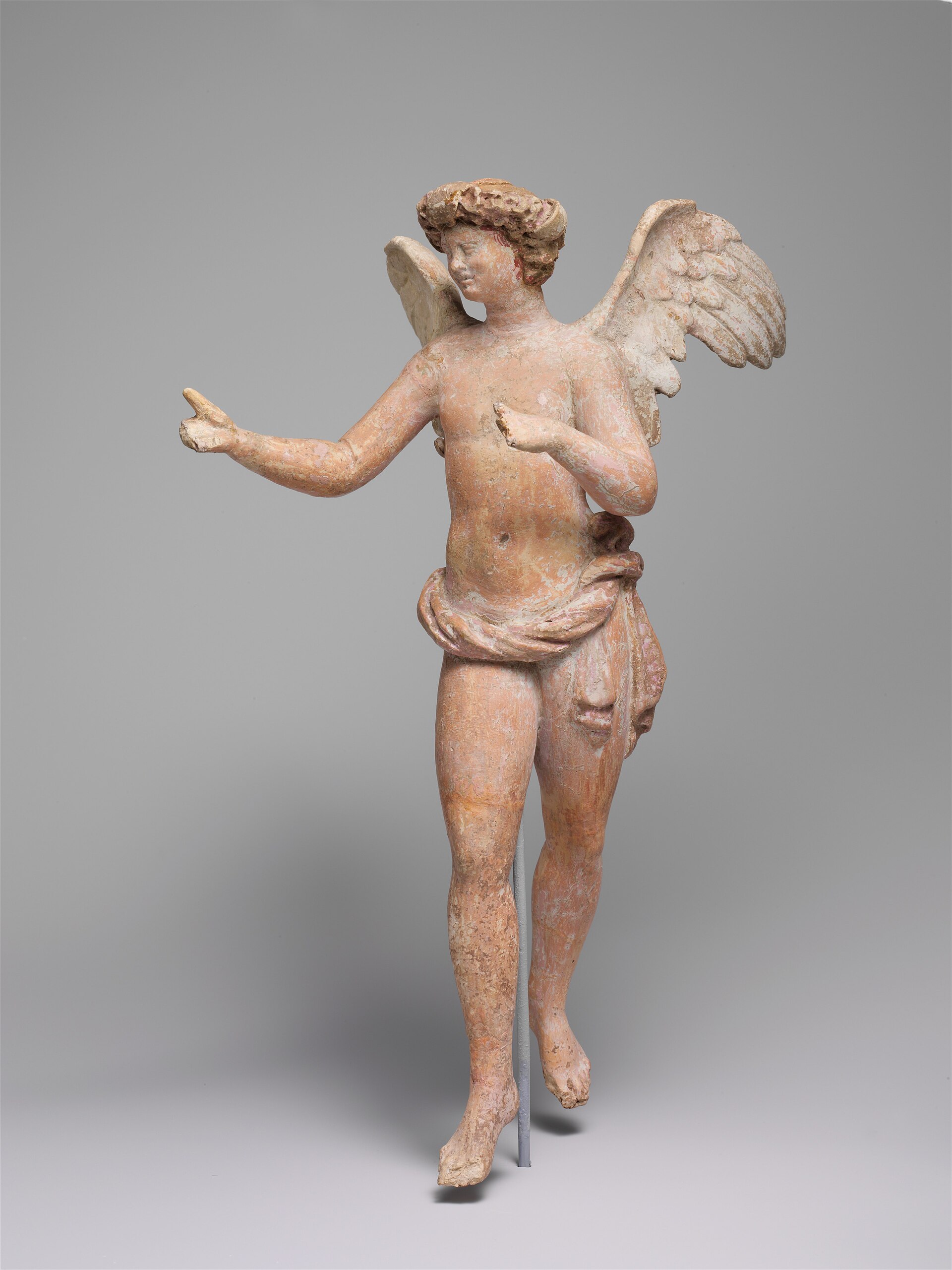
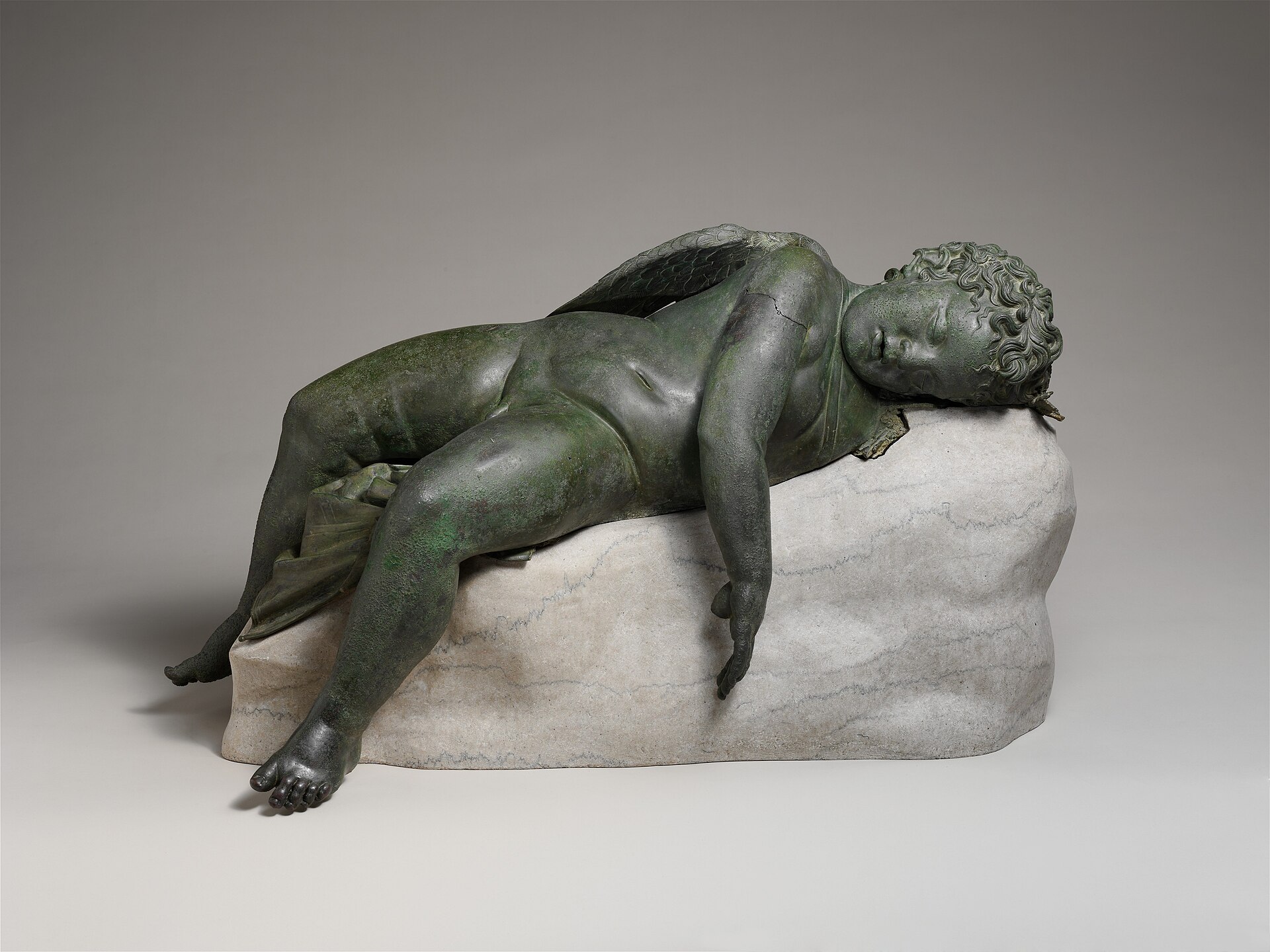
The image changed.
The question remained.
Bow, arrow and torch become common later. Cult at Thespiae, Pausanias says, began with an unwrought stone. Most men, he adds, consider Eros youngest and a son of Aphrodite. The oldest hymns he knew did not all agree.
Notes · 4
- Pausanias, Description of Greece 9.27.1–9.27.3 (Jones, 1918).
- Bronze statue of Eros sleeping. Greek, Hellenistic, 3rd–2nd century BCE. The Metropolitan Museum of Art, 43.11.4. Rogers Fund, 1943. CC0. Source
- Terracotta statuette of Eros flying. Greek, Myrina, ca. 200–150 BCE. The Metropolitan Museum of Art, 28.55. Gift of Waters S. Davis, 1928. CC0. Source
- Attic red-figure bobbin with Eros. Musée du Louvre, CA 1798. Fifth century BCE.

Eve
When Desire Grew Wings
0:000:00