EROS
ἔρως
The word this walk is made of.
In early poetry it can name a cosmogonic force, a god, and the experience of being undone by desire. Later it becomes one figure among the Erotes, and then Cupid.

II
Before the cherub. Before Valentine’s Day. Before the greeting-card heart.
Eros appears near the beginning. Fairest among the deathless. Already helping a cosmos move.
who unnerves the limbs and overcomes the mind and wise counsels of all gods and all men within them.
Hesiod, Theogony 120 to 122. Evelyn-White, 1914.
Hesiod’s Theogony says that first Chaos came to be, and next wide-bosomed Earth, dim Tartarus in the depth of the wide-pathed earth, and Eros, fairest among the deathless gods.
Gaia, Tartarus and Eros come to be after Chaos. They belong with Chaos among the first realities.
In the same poem, when Aphrodite is born from the sea-foam, Eros accompanies her and beautiful Himeros follows. Desire is both primordial and attendant. Already, inside one archaic text.
Why would desire appear so close to the beginning of a world?
III
λυσιμελής
Limb-loosening
Hesiod’s epithet is intimate. Eros relaxes the limbs. He overpowers mind and prudent counsel in the breast. Desire arrives as something that happens to a body that thinks.
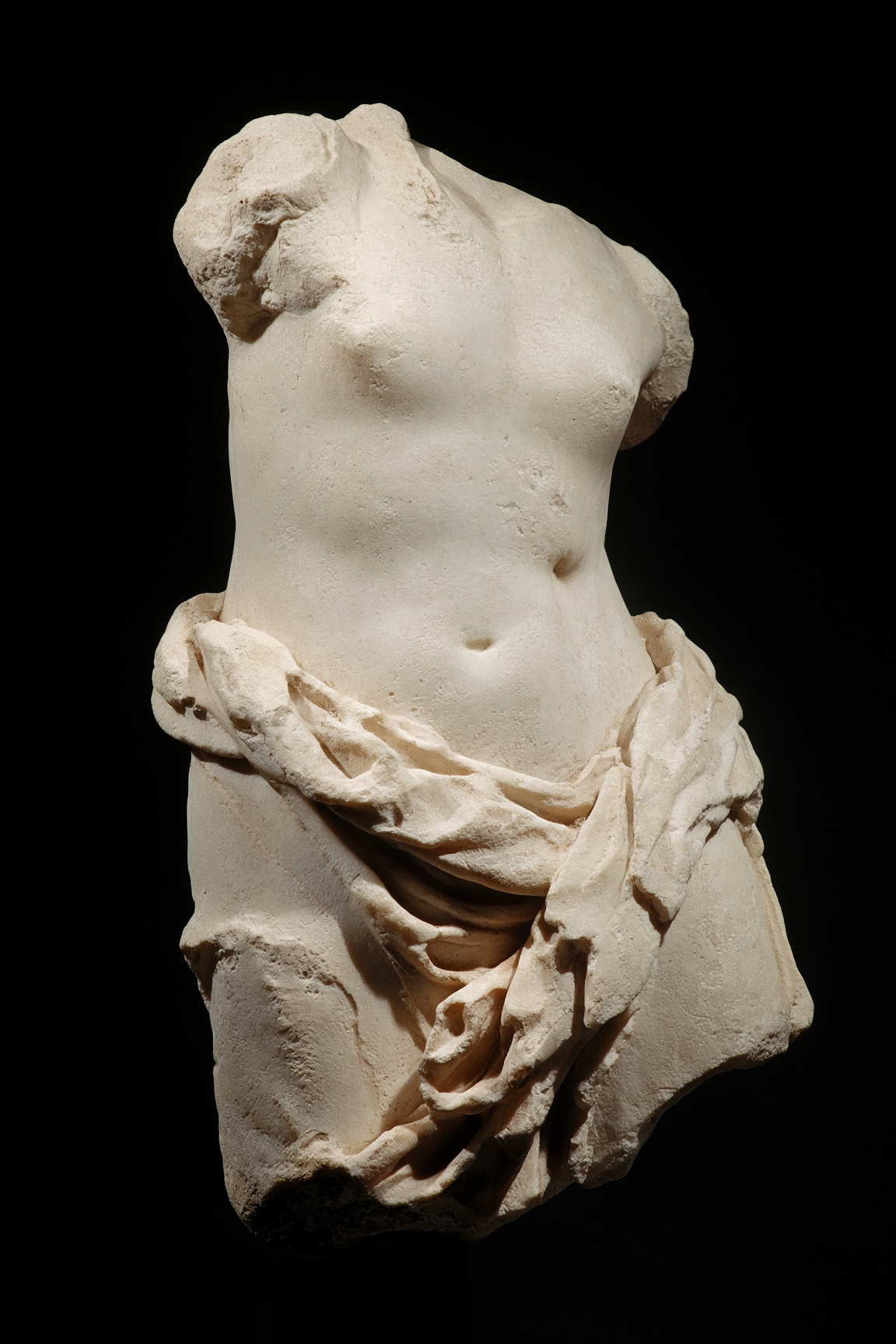
my tongue is broken down
a subtle fire has run under my skin
Sappho, fragment 31. Wharton, 1885.
Archaic lyric keeps the same physics. Sappho’s Eros shakes. A wind falls on mountain oaks. A tongue breaks. Skin burns. We experience being moved.
Why does wanting feel like something happening to us?
IV
γλυκύπικρον
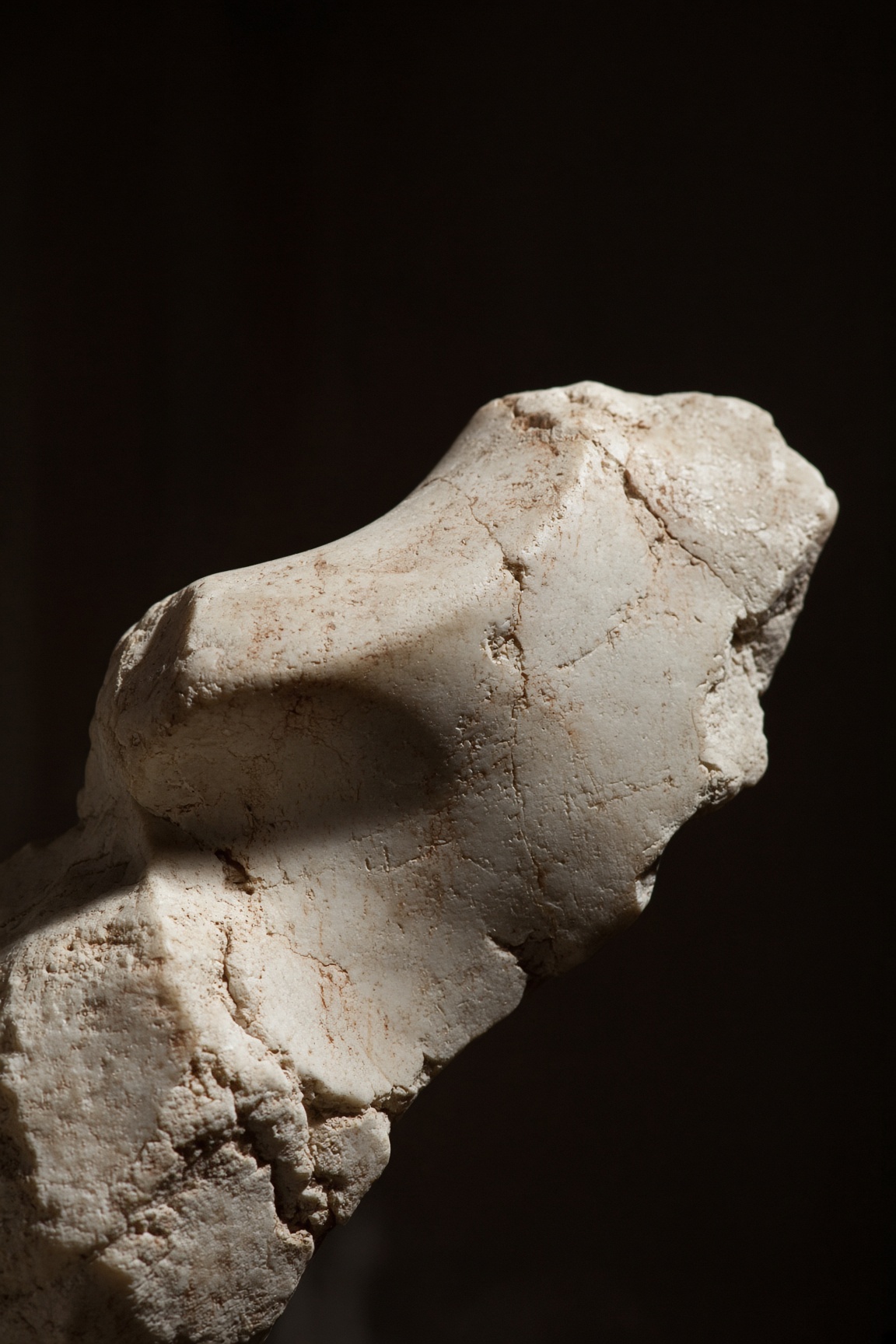
Sweetbitter. The compound holds both. Neither English word exhausts it.
γλυκύ
Approach. Pleasure. The beloved as presence. Hope that the distance might close.
one word
πικρον
Ache. Fear. The beloved as absence that still occupies the mind. A creature that cannot be managed.
Ἔρος δηὖτέ μ’ ὀ λυσιμέλης δόνει,
γλυκύπικρον ἀμάχανον ὄρπετον
Once again limb-loosening Eros shakes me, a bittersweet, irresistible creeping thing.
Sappho, fragment 130 Voigt.

The Greek is Sappho, fragment 130. γλυκύπικρον is actually there. The second line can lean toward Eros, toward the shaken speaker, or toward the fused event. Scholars have argued that the ambiguity is the point.
Desire can hold opposing states at once. The beloved can be elsewhere and still be the most present fact in a life.
Why can absence become so present?
γλυκύπικρον
The compound holds both.
V
Greek culture distinguished kinds of wanting. The figures remain fluid. English labels are a way in.
EROS
ἔρως
The word this walk is made of.
In early poetry it can name a cosmogonic force, a god, and the experience of being undone by desire. Later it becomes one figure among the Erotes, and then Cupid.
HIMEROS
ἵμερος
Attested with Aphrodite in Hesiod, Theogony 201.
Often rendered longing. In Hesiod, beautiful Himeros follows Aphrodite at her birth, with Eros. Pausanias later names a Skopas statue of Himeros beside Eros and Pothos at Megara.
POTHOS
πόθος
Yearning toward what is absent.
Later sources and art treat Pothos as a personified yearning, frequently for what is distant or gone. Skopas grouped Pothos with Eros and Himeros.
ANTEROS
ἀντέρως
Answering love, local cult.
Pausanias records an Athenian altar of Anteros tied to the deaths of Timagoras and Meles, and images of Eros and Anteros in a palaestra at Elis. Reciprocal love, answering love, and love avenged are later English attempts at the office.
Pausanias, writing in the second century CE, could still point to statues of Eros, Himeros and Pothos together at Megara, and to an altar of Anteros in Athens.
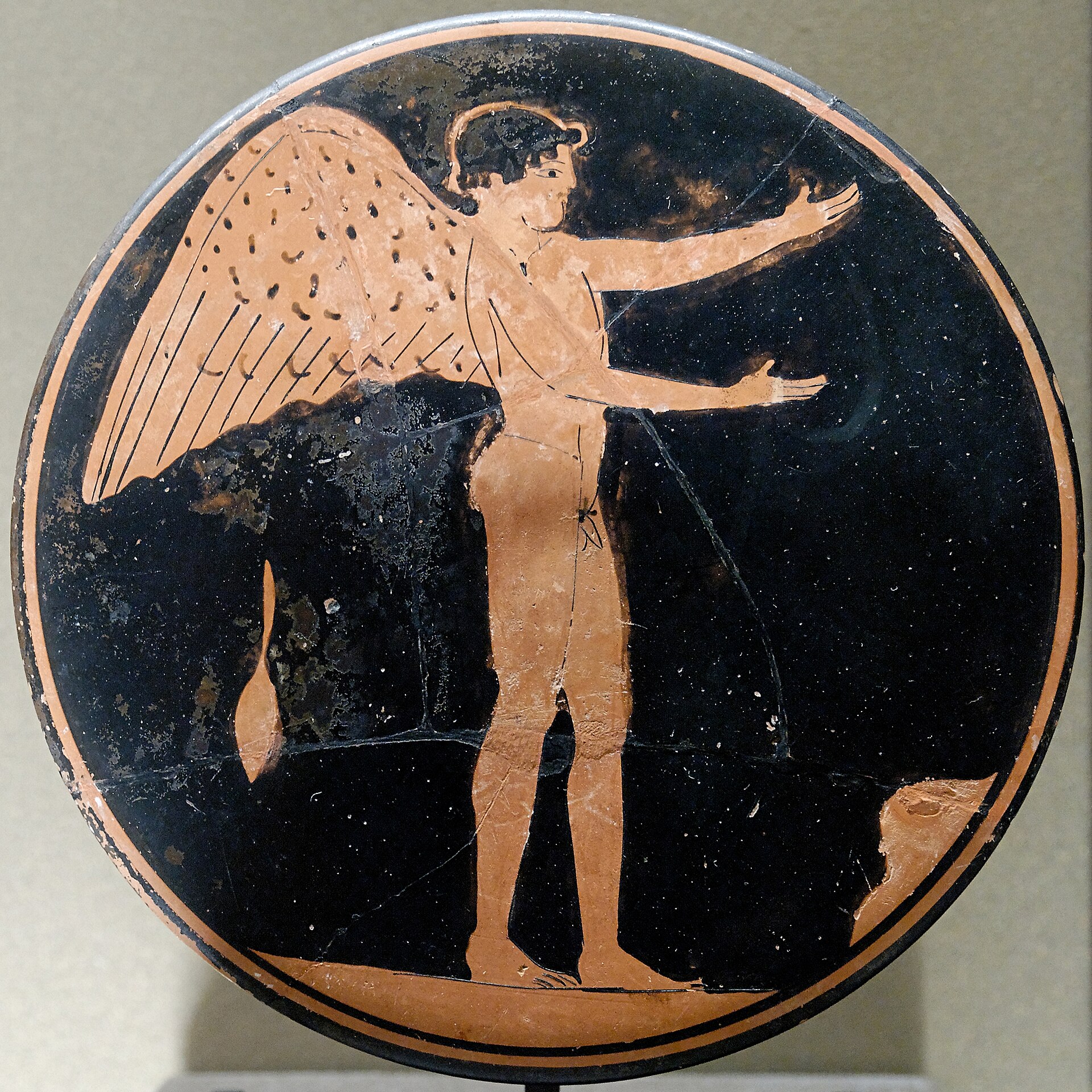
The body of Eros will arrive later, through objects. First the force. Then the names. Then the image that history kept changing.
VI
Greek named more than one way of being bound. It did not leave a numbered set of loves.
English uses one word for too many offices. Himeros, Pothos and Anteros already belong to the company of Eros. Other Greek words name other human work. They are neighbors. They are not a quiz.
Philia
φιλία
Friendship, goodwill, the wish that another fare well.
Aristotle spends two books of the Nicomachean Ethics on philia. He distinguishes bonds of use, of pleasure, and of virtue. The word also covers family and the city. It can sit beside eros. It is not eros with the wanting removed.
Xenia
ξενία
Guest-friendship.
A Homeric office: host and stranger bound by gift, protection, and Zeus Xenios. It is obligation and welcome. It is not a mood.
Philotes
φιλότης
Affection. In Empedocles, a cosmic force.
Empedocles names Love Philotes, set against Strife. Hesiod had already placed Eros near the beginning of a world. Two cosmogonies. Two names. They are not the same poem.
Storge
στοργή
Natural affection, especially of parents and children.
The word exists. High archaic poetry rarely leans on it. Later English made it one of four loves. The Greek is quieter than the chart.
Agape
ἀγάπη
The verb ἀγαπᾶν is old: to regard with affection, to be fond of. The noun becomes central in the Septuagint and the New Testament, where it can name God’s love and the love commanded of persons.
The later theology is later.
Anders Nygren opposed agape to eros as two religions of love. That argument belongs to the twentieth century. It is not Hesiod’s problem, and it is not this house’s verdict.
In 1960 C. S. Lewis published The Four Loves: storge, philia, eros, agape. Later lists added ludus, a Latin word, and pragma, a modern coinage. Those lists can help an English reader notice that love is not one thing. They are not a classical syllabus.
The chart is useful. It is not the source.
This walk stays with Eros because Eros is the problem of being moved toward what we do not yet have, or cannot keep.
The other words remain. They have their own offices.
VII
The traditions overlap. Emphasis changes. Later centuries remembered a child with a bow and took that image for the whole story.
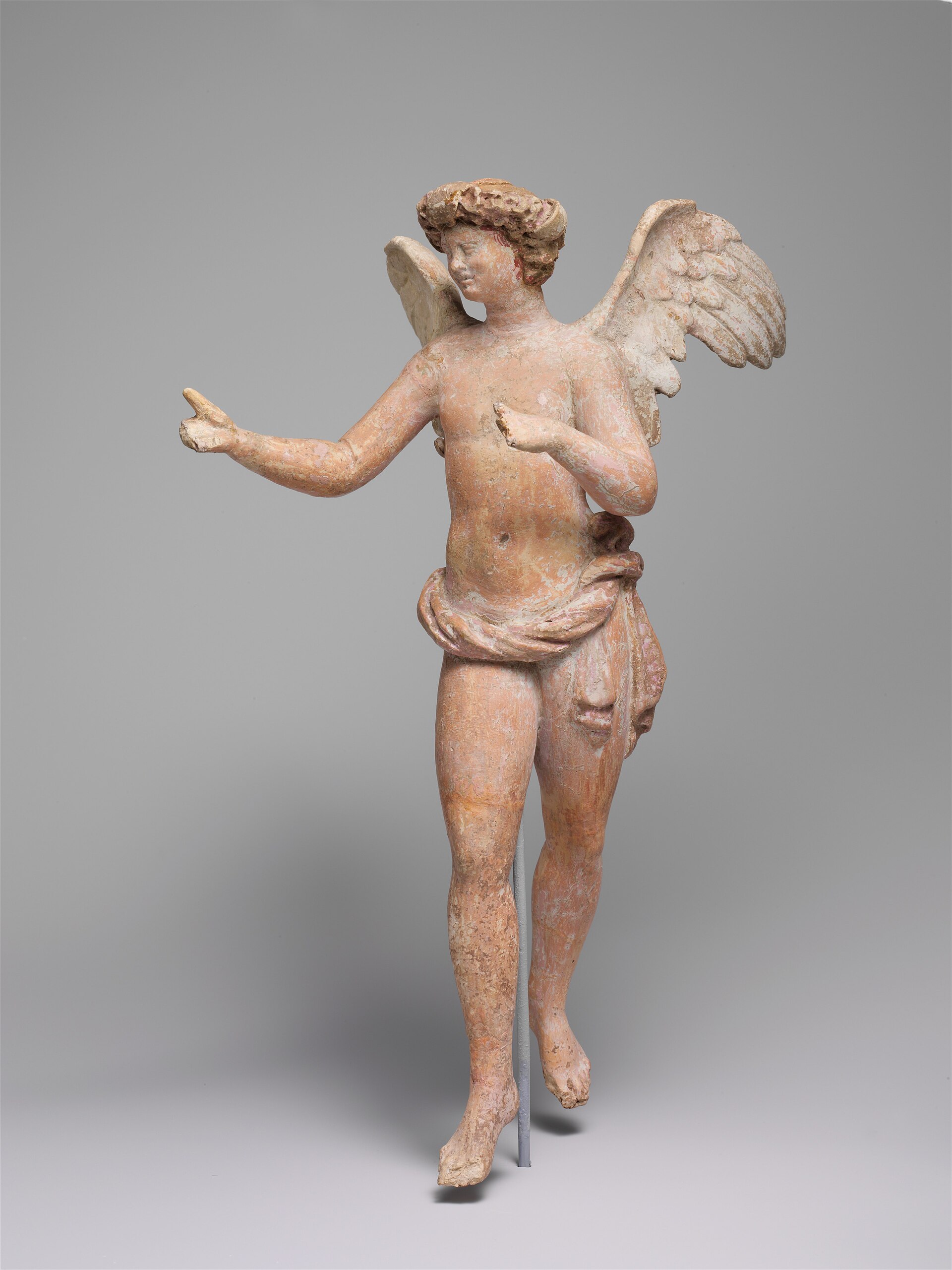
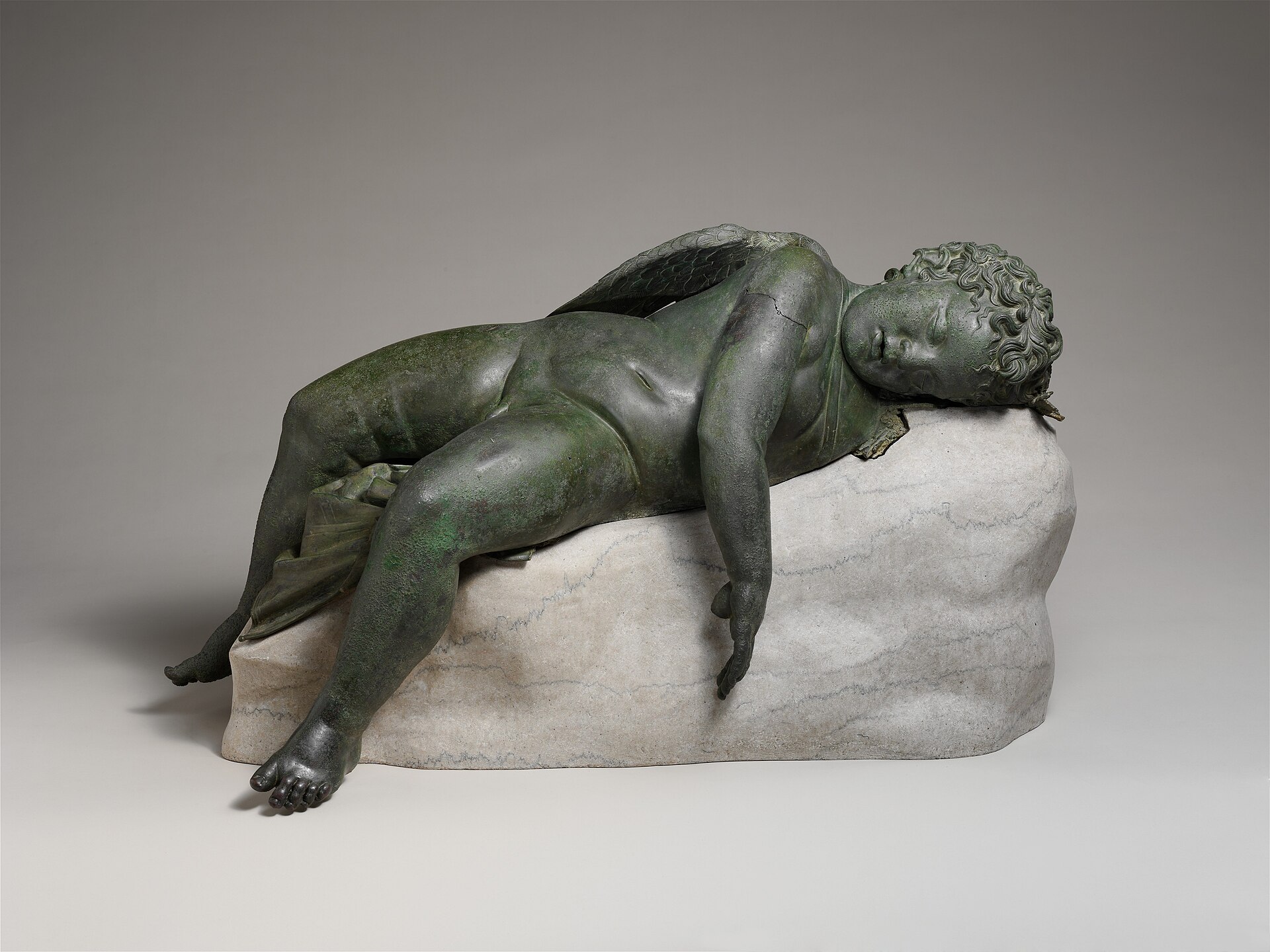
The image changed.
The question remained.
Bow, arrow and torch become common later. Cult at Thespiae, Pausanias says, began with an unwrought stone. Most men, he adds, consider Eros youngest and a son of Aphrodite. The oldest hymns he knew did not all agree.
VIII
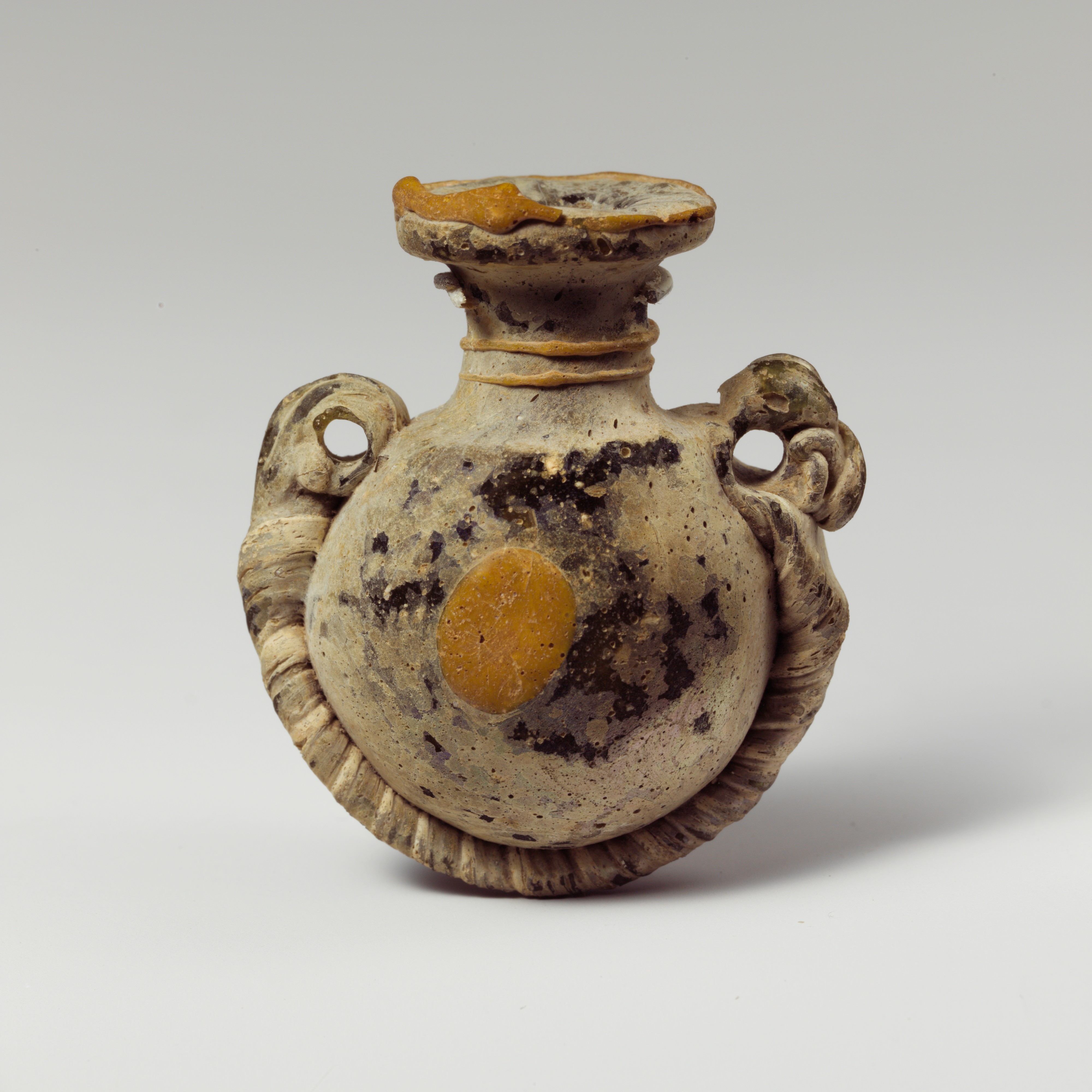
Later iconography makes desire a trajectory that arrives before deliberation. The arrow is a metaphor for a change of orientation. After a strike, the field is no longer even.
The field is still. Then a trajectory crosses it.
What changes when attention has been struck?
This is one inherited grammar for an event that feels, to many, as if it did not begin as a choice.

IX · Plato, Symposium
Do we desire because something is missing?
The Symposium is a drinking party after Agathon’s victory, remembered later as a contest of speeches about Eros. A drama of speakers. Each voice keeps its own office.

Phaedrus
Oldest of the gods, source of virtue in lovers.
Pausanias
Two Aphrodites, two Eroses: common and heavenly.
Eryximachus
A medical and cosmic principle of harmony.
Aristophanes
Comic myth of split humans seeking their other half.
Agathon
Youngest, most beautiful, poet’s praise.
Socrates / Diotima
Eros as daimon, lack, generation, ascent.
Alcibiades
A drunken interruption. Desire for a person who will not be possessed.
Poros
Resource
Diotima says Eros was conceived at a feast of the gods, son of Poros (Resource, Expedient) and Penia (Poverty). He is neither simply god nor mortal. He is a daimon, an intermediary.
Penia
Poverty
Because he lacks, he desires. Because he has a share of resource, he schemes, hunts, and makes. Desire is absence that knows how to reach.
Diotima’s argument is that Eros is of the beautiful and the good, and that mortal nature tries to continue itself in what it loves. Getting what one thought one wanted sometimes reveals the next lack.
Aristophanes’ tale of original double beings, split and searching, is Aristophanes’ speech inside the dialogue.
Desire is absence that knows how to reach.
X
Why does beauty command attention? Can what attracts us become a way of learning what we value?
Plato’s Eros is entangled with to kalon, the beautiful, which in Greek is larger than cosmetics. Beautiful bodies, beautiful practices, beautiful knowledge. The so-called ladder is a pedagogy of attention.
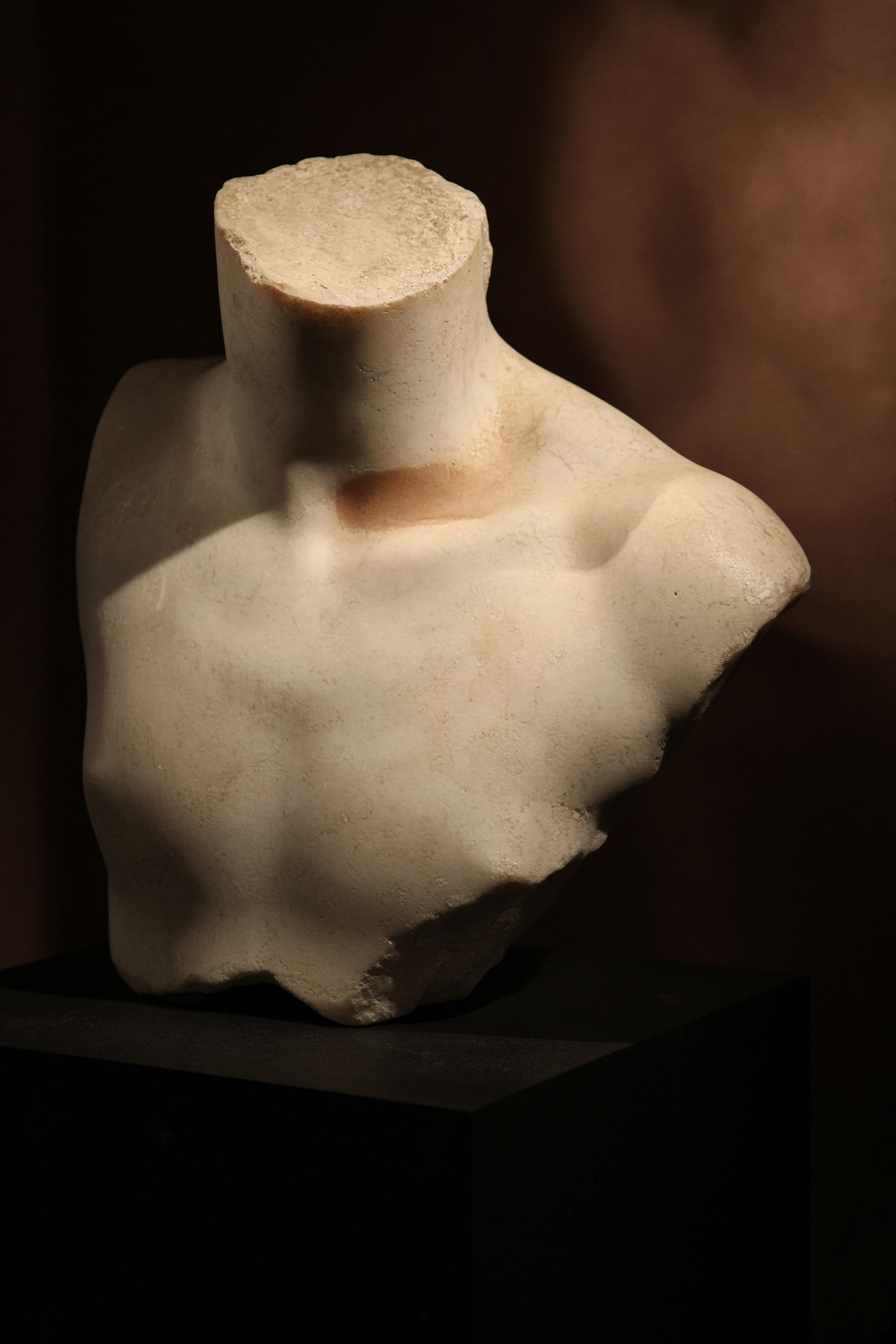
FIG. 07 · DIOTIMA’S ASCENT
Plato, Symposium 210a to 212a. A pedagogy of attention.
A particular beautiful person arrests attention.
Beauty noticed in more than one form.
Practices, character, the beauty of a life.
Customs, institutions, made things.
The sciences and the love of what can be understood.
A vision that reorders love.
Particular beauty can start the movement. If the movement stops at possession of a surface, Diotima would say the lover has not yet learned what the arrest was for.
XI · Phaedrus
In the Phaedrus, Socrates recants an earlier speech that treated the lover as a harmful form of unreason. Some madness, he says, is a gift. There are four: prophetic, ritual, poetic, and erotic. A philosophical name for states that exceed ordinary calculation.
The soul grows wings when it remembers beauty.

Prophetic
A seer moved beyond ordinary calculation.
Ritual
Initiation, purification, the rites that unbind.
Poetic
The Muse taking a maker further than craft.
Erotic
The madness this walk follows. Beauty reminding the soul.
Why have human beings so often experienced love as something that exceeds ordinary reason?
The Phaedrus argues that a certain being-moved is itself a way of knowing, and that the charioteer still has to steer.
when she beholds the beautiful, then the old awe steals over her
Plato, Phaedrus 251a. Jowett, 1892.
knowing that arrives through being moved
XII
Diotima says mortal nature seeks to continue itself, in body and in soul. Desire so often needs a form that can outlast the moment of wanting.
What happens when longing finds form?


Something interior becomes exterior: language, gesture, object, work. Consciousness reaching for a shape that can be carried.
What happens when longing finds form?

XIII
The Greeks named a force. We still ask what it feels like to be moved. A quiet life can be alive. Rest can be alive. Stillness can be alive.
Sometimes aliveness is only the moment attention becomes full.
Aliveness is not noise.
XIV
A mind cannot attend equally to everything. Care changes salience. What we love can teach us where to look. What we love can also teach us to see what we hope is there.
Salient is not the same as true.
A mind cannot attend equally to everything.
The field proved something about the looker. Attention is a selection. Salient is not the same as true.
Desire can sustain attention, motivate study, make detail vivid, and keep a question alive. It can also project, select evidence, ignore contradiction, overinterpret coincidence, and confuse longing with knowledge.
Can teach
Can distort
An observer notices a date, a number, a glance, a repeated motif. Several interpretations remain possible. Desire may motivate the investigation. It cannot choose the result in advance.
A signal
The coincidence is too exact to ignore. Desire has found a pattern that wants a name.
A coincidence
Minds are good at drawing figures in a crowded field. The same points could support another story.
An open question
The observation is real. The meaning is not yet earned. Keep the chronology. Keep the counterevidence. Keep looking.
Calibration is the refusal to let longing write the evidence. Leave more than one reading standing.
Instruments of calibration: chronology, primary source, counterevidence, alternative explanation, independent measurement, another person’s autonomy, the possibility of being wrong.
This is mature Eros.
XV
Eros starts the search.
Logos tests the claim.
Eros keeps us looking.
EROS
I need to know.
LOGOS
What do we actually know?
SOURCE
Cite the line. Name the century. Separate speaker from doctrine.
COUNTER
Another tradition says otherwise. Another observer draws a different figure.
EROS
Keep looking.
Eros gathers attention. Logos gathers, articulates, reasons, gives account. Desire may begin the search. Reason disciplines the search. Desire keeps the question alive. Reason keeps desire from becoming its own evidence.
Knowledge does not arise only from detached curiosity. Sometimes we study what fascinates us, remember what moves us, investigate what will not leave us alone, and build because a question has acquired charge.
XVI
To love someone is not to erase the distance that makes them someone else.
Love may compel the lover.
To desire is to be moved. The movement can be total for the one who feels it. That intensity is real as experience.
Love must never compel the beloved.
Another person retains interiority, freedom, choice, privacy, difference, the right not to reciprocate, the right to change, the right to leave.

A beloved is someone else. Even profound love does not create access to another person’s private mind. Longing is not evidence of reciprocity. Passion is not permission.
Desire tells us something about the desirer. It does not, by itself, tell us what the desired person feels.
XVII
Greek Eros is older than the Latin tale. Roman Cupid is a reception. In the second century, Apuleius of Madauros set an inset story inside a comic novel: a woman named Psyche, a lover who comes by night, a lamp, a flight, a set of tasks. That narrative has its own house.
Desire meets soul.
What happens next belongs to another story.

XVIII
Humans know they do not last. Yet they still reach past a single moment. Eros so often wants a form that can be carried.
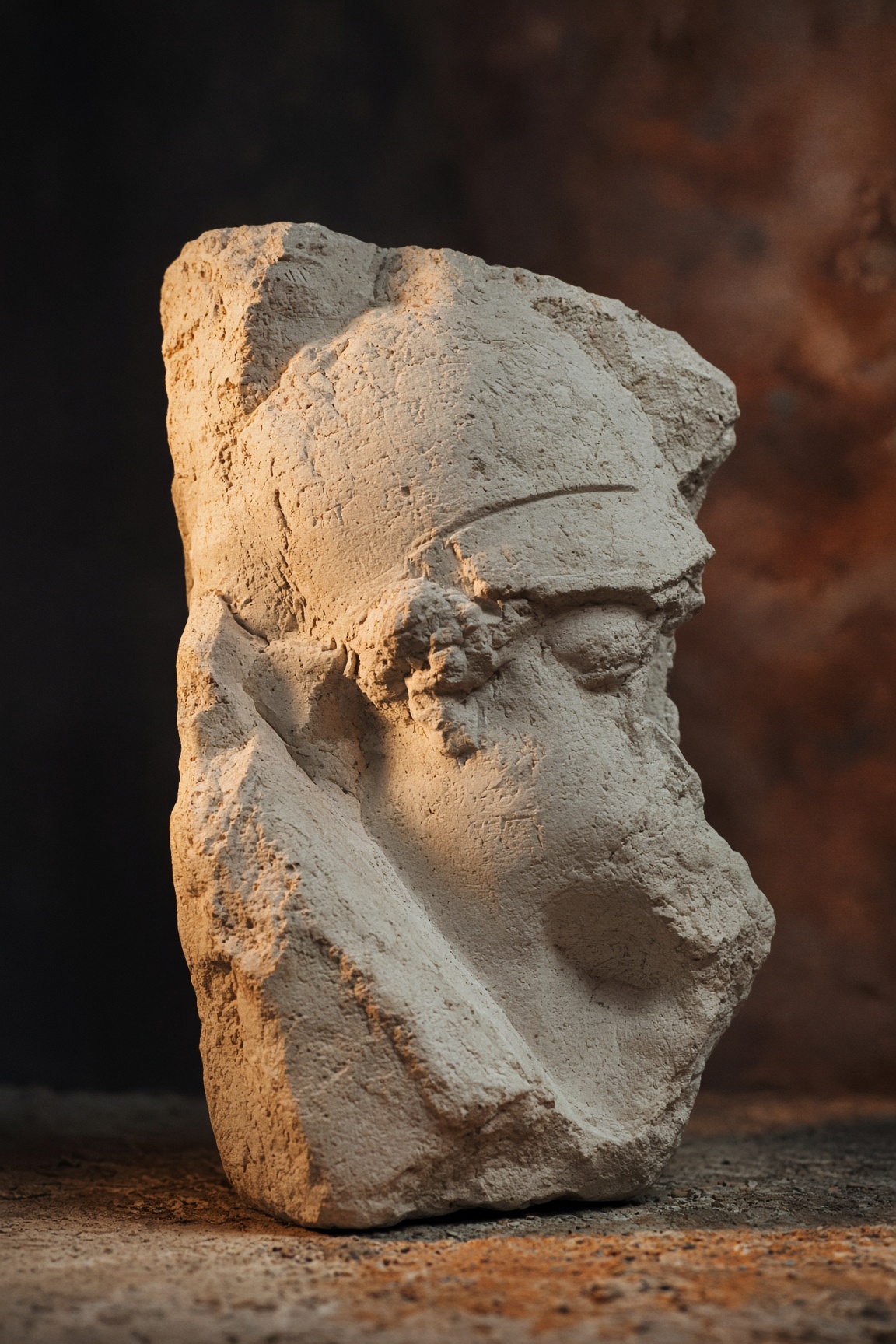
Eros
What moves consciousness toward.
Mnemosyne
What consciousness carries forward.
We move toward what matters. We remember what has moved us. Distinct offices.
Eros creates movement.
Mnemosyne creates continuity.
XIX
433
EROS
asteroid designation
On asteroid 433 Eros, the names are already telling a story.
A near-Earth body, about thirty-four kilometers along its long axis, received the name of desire in 1898. A century later a spacecraft stood on it. The names that followed belong to the sky’s own gazetteer.


Crater
Psyche
beloved of Eros
Beloved of Eros; personification of human soul in Greek mythology.
Gazetteer of Planetary Nomenclature. IAU, 2003.
31.60°N94.60°W4.80 km
NASA’s caption of 17 February 2001 already used the name. The IAU made it official two years later. The crater is a place. The tale of the lamp lives in another house.
Psyche
beloved of Eros
Beloved of Eros; personification of human soul in Greek mythology.
31.60°N · 94.60°W · 4.80 km
Himeros
attendant of Eros
Attendant of Eros; personification of the longing of love in Greek mythology.
21.20°N · 282.30°W · 10.00 km
Narcissus
the figure who fell in love with his own reflection
Young man from Greek mythology who fell in love with his own reflection in water.
18.20°N · 7.10°W · 2.90 km

Craters on Eros are named after legendary and famous lovers.
Dorsa on Eros are named after scientists who studied the asteroid.
The names were proposed from NEAR mosaics in 2001. The IAU adopted them in 2003.
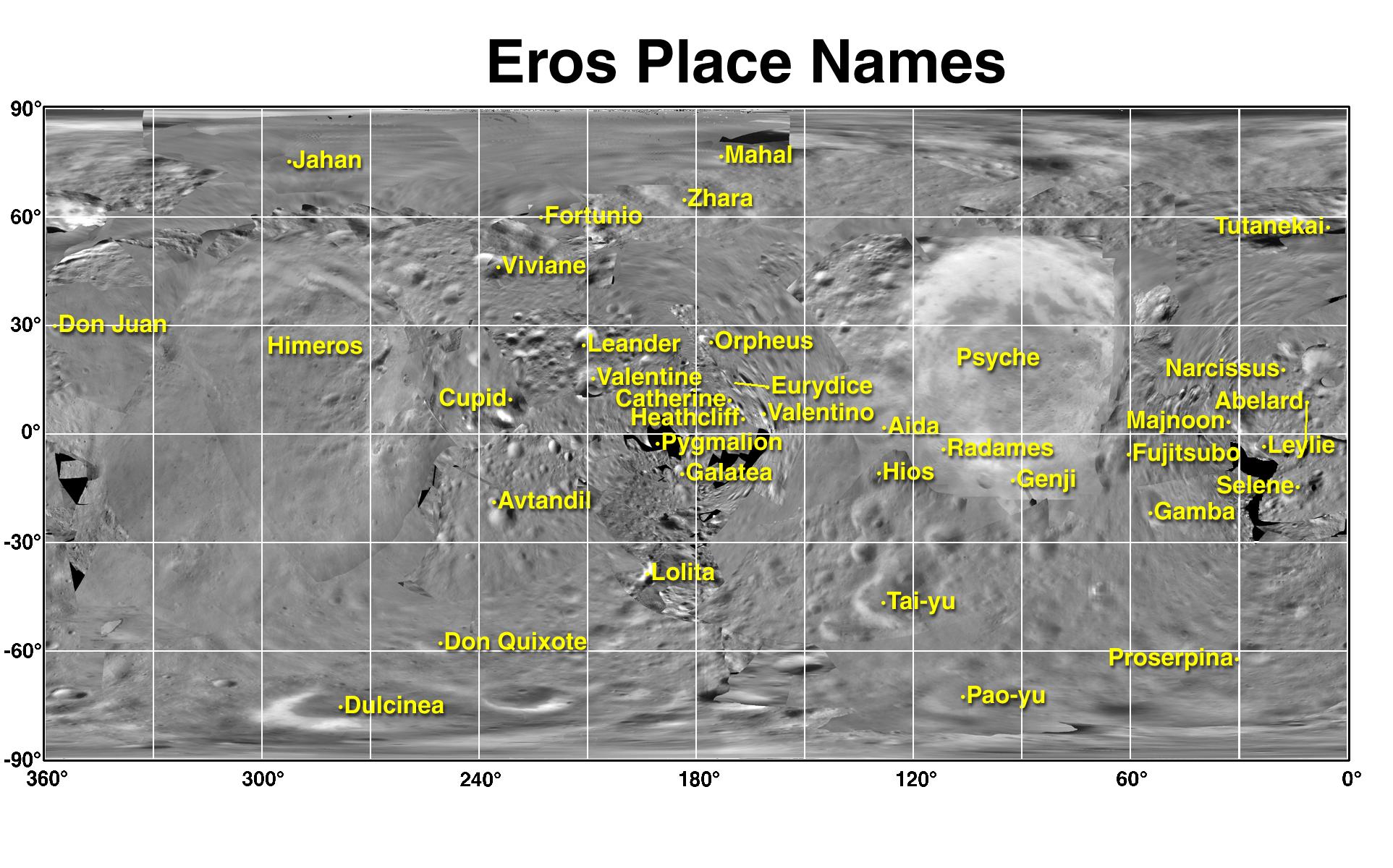
Hinks Dorsum
42.00°
catalogued center latitude
The ridge is named for Arthur Robert Hinks, 1873–1945. He first used Eros to measure the solar parallax. The Gazetteer records the center of Hinks Dorsum at 42.00°. Planetographic. +West. 0–360.
The decimal is the catalog’s. It is a latitude, not a rhyme.

Source
Gazetteer of Planetary Nomenclature, IAU Working Group for Planetary System Nomenclature, U.S. Geological Survey. Approved 2003.
Support
NEAR Shoemaker plates. NASA / JPL / JHUAPL. Public domain.
Limit
433 is a designation. 42.00° is a latitude. 42 is an English cipher result. They are not the same kind of evidence. The photographs are not the gazetteer.
The story of the lamp belongs to another house.
XX · Gematria
In Greek the same signs used to write a word were used to count. ἰσοψηφία: equal pebbles. A pebble was a counter. The letters of ἔρως add to 1105.
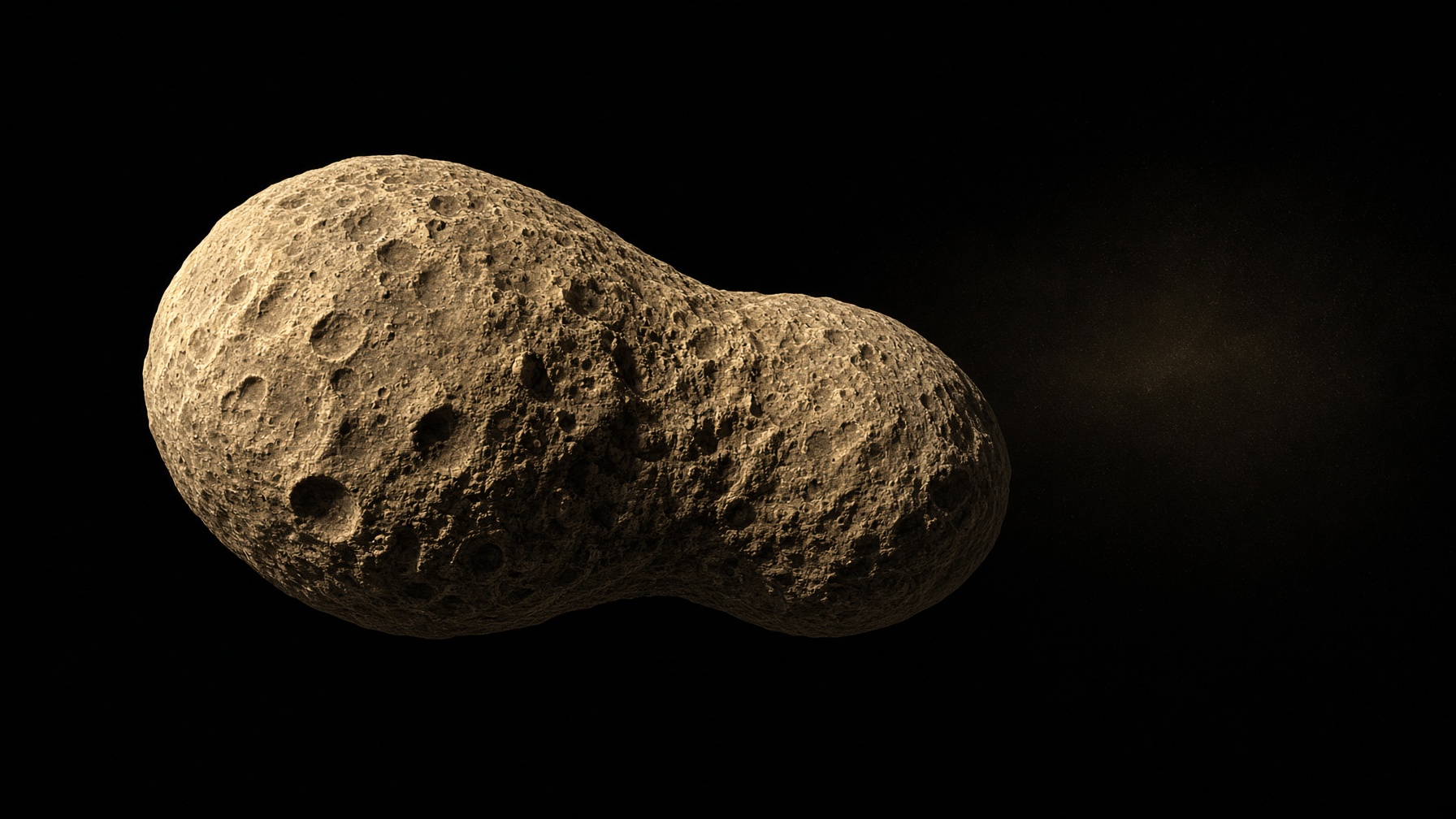
A body in the inner solar system received the same name. 433 Eros. NEAR Shoemaker entered orbit on 14 February 2000 and landed on 12 February 2001. First asteroid orbited. First asteroid landed on.
Meaning first. Number afterward.
Greek isopsephy of ἔρως
1105
A historical sum. The letters were already numbers.
FIG. 04 · ISOPSEPHY
Milesian (Ionian) letter numerals. In Greek, the same signs used to write a word were used to count.
ἔρως
Sum1105
ἰσοψηφία: equal pebbles. A pebble was a counter. A Greek word is also a number.
FIG. 03 · 433 EROS
First asteroid orbited by a spacecraft. First asteroid landed on.

DOCUMENTARY IMAGENASA / JHUAPL · NEAR Shoemaker · 14 February 2001 · public domain
FIG. 02 · NEAR SHOEMAKER CONTACT SHEET
Documentary frames. NASA / JPL / JHUAPL. Public domain.

DOCUMENTARY IMAGENASA / JPL / JHUAPL · PIA02467 · 14 February 2000 · public domain
DOCUMENTARY IMAGENASA / JPL / JHUAPL · PIA02923 · 29 February 2000 · public domain
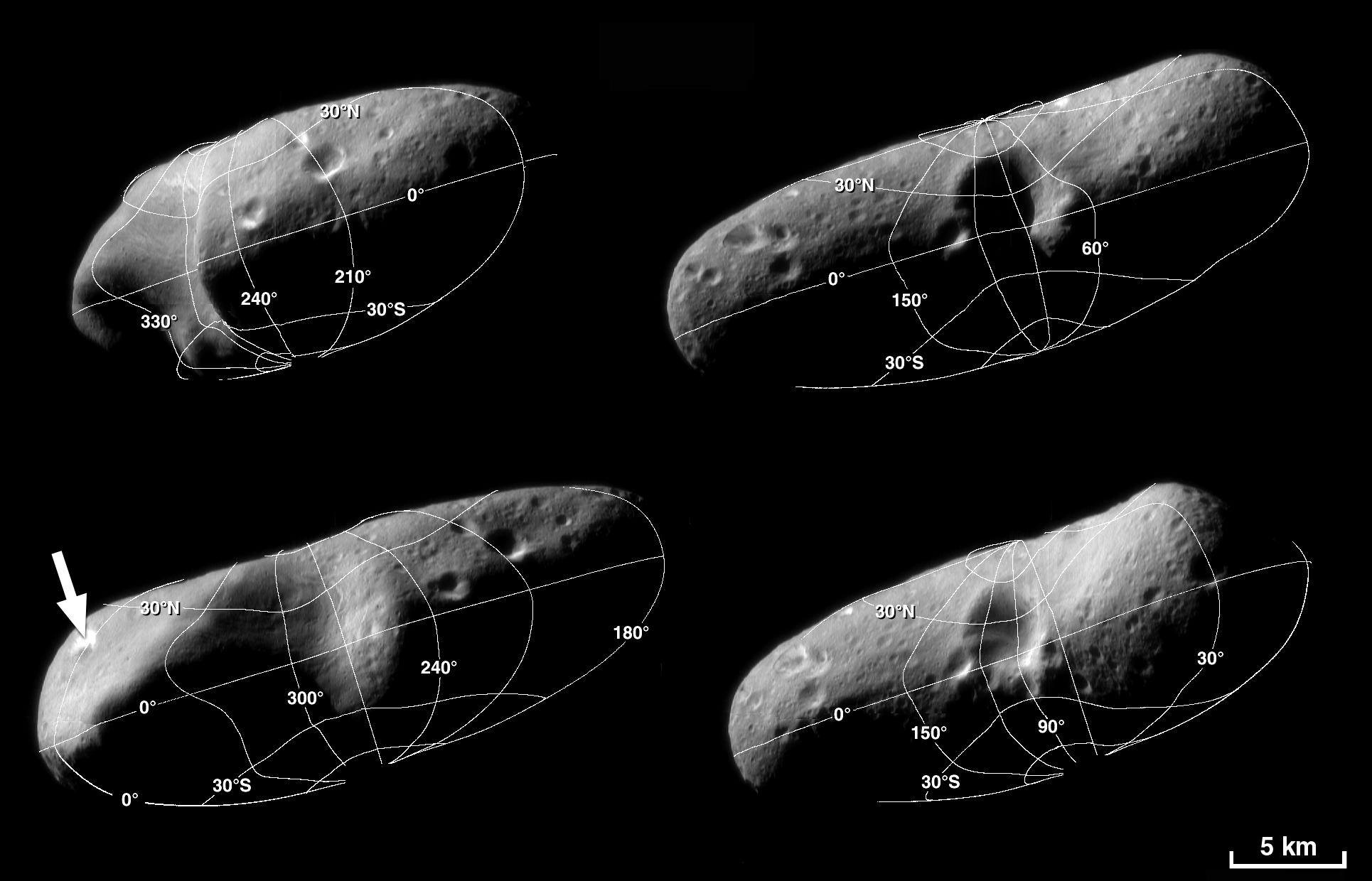
DOCUMENTARY IMAGENASA / JPL / JHUAPL · PIA03112 · public domain
FIG. 05 · ENGLISH FOUR-FACE
EROS · noticed September 2026
EROS
57 · 51 · 21 · 24
Reverse Reduction lands on 24. EROS is the ordinary English transliteration of ἔρως. The spelling was already the title. The arithmetic arrived later. Calculated as arithmetic. Held as a rhyme.
FIG. 06 · NEIGHBORING SUMS
The same pebbles, other names of wanting.
The English transliteration EROS, counted later, returns 57, 51, 21, 24. Reverse Reduction lands on 24. The historical word is ἔρως. The arithmetic from English letters was noticed in September 2026, after the subject of this walk had already been chosen. A rhyme in the margin of a word that already mattered.
A later noticing
The historical word is ἔρως. The English rhyme is not the explanation of the site.
XXI
Something moves us.
What makes us come alive?
a subtle fire has run under my skin
Sappho, fragment 31. Heard again, after the walk.


Eros can be primordial. Eros can wound. Eros can lack. Eros can reach. Eros can make beauty matter. Eros can generate. Eros can awaken attention. Eros can create. Eros can mislead. Eros needs freedom. Eros needs discernment. Eros can become a reason to learn.
Eros is not only about who we want. Eros asks what has the power to move us.
EROS
What moves you?
To be alive is to notice what has the power to move us, and to choose how we answer.
a subtle fire has run under my skin
Eve
Before Cupid
0:000:00